Can sermorelin slow aging? What the research shows
See what research says about sermorelin and aging, from sleep and recovery to body composition, skin, cognition and bone health.

Sermorelin stimulates the pituitary to release growth hormone, which can increase insulin-like growth factor 1. Research has yet to establish that sermorelin slows aging or improves sleep, skin, body composition, recovery, cognition or bone strength in generally healthy adults. Many frequently cited findings came from studies of injected growth hormone.
How does sermorelin affect growth hormone and IGF-1?
Sermorelin is a lab-made analogue of growth hormone–releasing hormone. It acts on a responsive pituitary gland and stimulates release of growth hormone, which signals the liver and other tissues to make IGF-1. Somatropin supplies recombinant growth hormone directly. Clinical benefits and risks need to be established for each treatment.
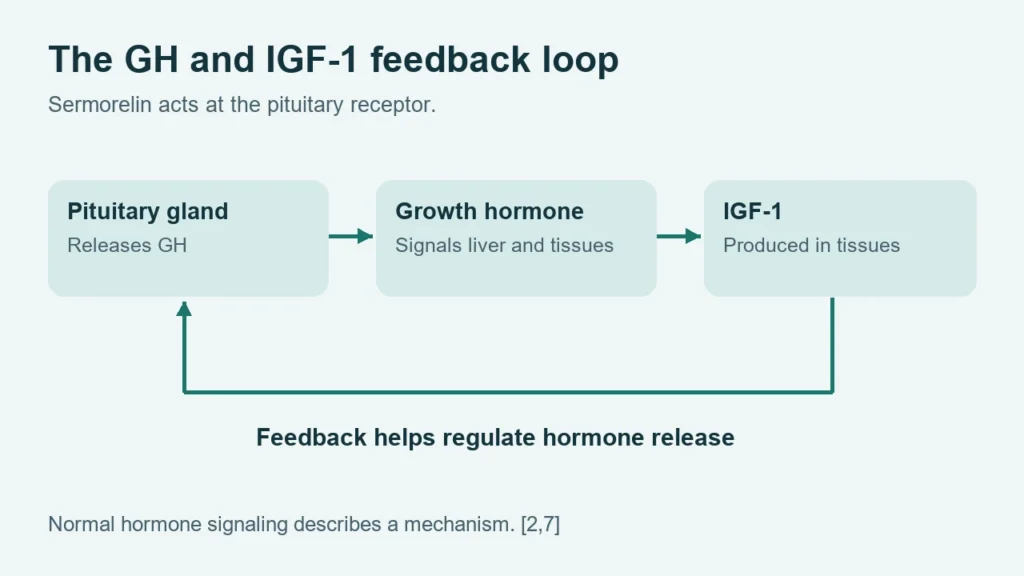
Growth hormone is released in pulses, with a prominent night-time pulse often associated with early slow-wave sleep. Average growth hormone output and slow-wave sleep tend to decline with age, but the size of these changes varies. Hormone feedback via the hypothalamus and pituitary helps regulate GH release. A rise in GH or IGF-1 cannot establish long-term safety, efficacy or effects on aging. [1,2,7]
What do the studies on fat, muscle, skin and bone show?
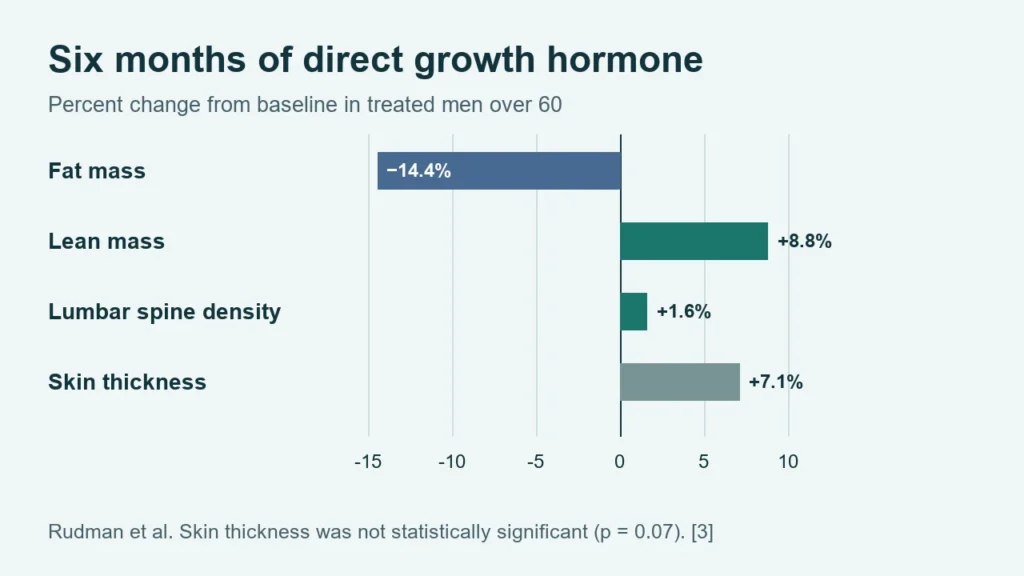
A small six-month study in men over age 60 reported more lean mass and less fat mass after direct growth hormone treatment. The study also found a small increase in lumbar spine bone density. Those results apply to the treatment and population studied. Skin thickness findings were statistically inconclusive.
| Outcome | Evidence cited | What readers can infer |
|---|---|---|
| Body composition | Lean mass +8.8%, fat mass −14.4%. [3] | The effects were seen with injected GH in a small study of older men. |
| Skin | Thickness +7.1%, p = 0.07. [3] | The study did not establish improved hydration, elasticity or wound healing. |
| Bone | Lumbar spine density +1.6%. [3,6] | GH and IGF-1 participate in bone remodeling. Fracture reduction remains unestablished. |
A separate controlled trial in men over 69 with low IGF-1 found changes in body composition with direct GH, without improvements in strength, endurance or functional ability. It also reported more adverse effects. Increased lean mass should therefore be interpreted in the context of what a study actually tested. [4]
What about better sleep, faster recovery or clearer thinking?
Growth hormone and slow-wave sleep are closely linked, and growth hormone signaling affects several tissues involved in repair. These mechanisms are different from evidence that sermorelin improves insomnia, soreness or concentration. The cognitive study often cited in this context used growth hormone replacement after a traumatic brain injury.
- Sleep and daytime energy. Research describes age-related changes in night-time GH secretion and slow-wave sleep. It does not establish that bedtime sermorelin reliably improves sleep duration, alertness or mood. [1,2]
- Recovery and endurance. Evidence that GH affects tissue turnover does not establish that sermorelin speeds recovery between workouts, reduces joint stiffness or improves aerobic fitness. [2,4]
- Memory and focus. A small study of GH replacement after traumatic brain injury observed changes on some cognitive tests. Its findings do not establish that sermorelin improves memory or focus in healthy adults. [5]
When is it worth discussing growth hormone testing?
If fatigue, sleep changes or poorer recovery persist, a medical evaluation can help identify causes. An endocrinologist may consider adult growth hormone deficiency when the history raises suspicion, such as after pituitary disease, surgery or radiation. Medical guidelines recommend interpreting IGF-1 in context and often using stimulation testing for confirmation.
How do the FDA indications differ?
Sermorelin was previously marketed in the United States for certain pediatric treatment and diagnostic uses. The FDA found that those products were withdrawn from sale for reasons other than safety or effectiveness. That historical determination does not establish approval for adult anti-aging use. Some somatropin products are approved for specific indications, including confirmed adult growth hormone deficiency. No FDA-approved treatment raises GH for the purpose of slowing aging. [2,7,8]
Direct growth hormone can cause fluid retention, joint pain and changes in glucose control. Evidence does not establish that sermorelin is safer for long-term use in generally healthy adults. A clinician can help decide whether testing, a referral or another approach fits the symptoms. [2,7]
Common questions about PEPLIX HEALTH
Peplix Health offers cash-pay consultations about hormone and metabolic concerns. Monarch Brands LLC manages nonclinical operations, and independent, board-certified physicians make medical decisions. Your physician can review your symptoms and goals and determine whether to order tests, recommend a specialist or discuss treatment based on your medical history.
Is there a standard treatment timeline for healthy aging?
Research has not established a reliable benefit timeline or dosing schedule for sermorelin as an anti-aging therapy. Physicians individualize care based on the indication, formulation, response and monitoring needs. [2,7]
Where can a compounded prescription be filled?
When a compounded preparation is clinically appropriate and legally available, a licensed pharmacy operating under Section 503A may fill a patient-specific prescription under federal and state requirements. Compounded preparations do not undergo FDA premarket review for safety, effectiveness or quality. [9]
For consultation information, see our longevity guide or start an online assessment.
This article is for general education and does not replace individualized medical advice.
Sources
- Van Cauter and Copinschi. Growth hormone and sleep
- Endocrine Society. Hormones and aging scientific statement
- Rudman et al. Human growth hormone in men over 60
- Papadakis et al. Growth hormone and functional ability
- High et al. Growth hormone after traumatic brain injury
- Giustina et al. GH, IGFs and the skeleton
- Endocrine Society. Adult growth hormone deficiency guideline
- FDA. Historical Geref withdrawal determination
- FDA. Compounding questions and answers
This article is for general education and is not medical advice. Talk with a licensed clinician before starting, stopping or changing any treatment. Compounded medications are not FDA-approved. See our safety information.
Keep reading

Peptides & Longevity
BPC-157 and Growth Hormone in Tendon Recovery
Learn what BPC-157 studies found in rat tendon cells, what IGF-1 can tell you, and why tesamorelin has no proven role in tendon recovery.

Peptides & Longevity
Growth Hormone Secretagogues and the Evidence Behind Them
Compare tesamorelin, sermorelin, CJC-1295, ipamorelin and MK-677. Learn what studies found about GH, IGF-1, safety and FDA status.

Peptides & Longevity
What the FDA Peptide Compounding Review Means for Patients
See what the July 2026 FDA advisory votes and HHS draft mean for BPC-157, TB-500, Semax, and other peptides considered for 503A compounding.